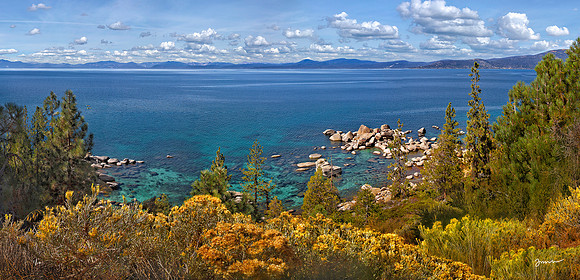
Kayaking Tahoe Blue
Location: 6,223 ft elevation, East Shore, Lake Tahoe, CA
Created 09/28/2013 12:20 :14 pm
Camera: Canon EOS 7D
Lens: EF24-105 f/4.0L IS @ 24mm
Aperture: f/16.0; 1/50; ISO 100; 40 shots; stitched HDR Pano
Lake Tahoe's cobalt-blue water beckons to be experienced, and being in a kayak is one of the best ways to do it for me. Being the country's second deepest lake, its incredible depth of 1,644 feet defies imagination; this 22-mile-long by 12-mile-wide pond holds 41 trillion gallons of fresh water. It's also among the oldest lakes on the planet. About 24 million years ago, the Sierra Nevada block was formed by tremendous uplifting; a common misconception is that the collapse of a volcanic crater created Tahoe, but the topography's rise and fall formed the basin due to faulting. For over 10,000 years, the alpine mountain lake was well known only to nomadic Native American tribes, such as the Martis and Washoe Tribes. They called it ‘Da ow ga’, meaning Lake. Late to the party, about 180 years ago, history also cites John C. Fremont as the one who "discovered" Lake Tahoe. Lake Tahoe does not get all its iconic blue tint because the water is so clear; instead, the Lake's blueness comes from the amount of algae in the water, a fact researchers were surprised to discover when they first set out to quantify the clarity of Lake Tahoe's water. In 2023, a significant improvement in clarity was measured to be nearly 72 feet; that's like seeing seven stories underwater. This was a vast improvement over Tahoe's second-worst reading of 61 feet measured in 2021. However, in 1968, the first recorded readings showed the water was clear enough to see the disk at a depth of 102 feet! On this vivid Fall Day, in the photo, next to the top of the pine trees on the left, see if you can spot the two tiny kayakers paddling on the big Blue. Connecting with the shores or exploring its deeps, enjoying Tahoe's underwater colors and reflections never ceases to amaze.